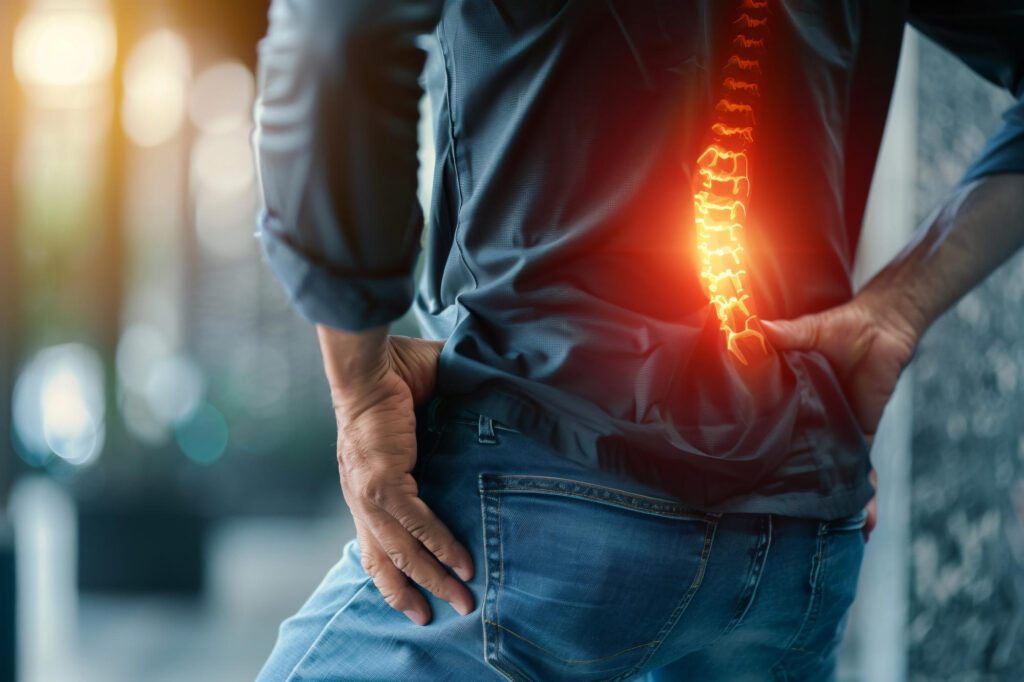
Lumbar spinal stenosis (lumbar spinal stenosis) is a condition caused by the narrowing of the spinal canal, which puts pressure on the spinal cord and nerve roots. This can cause back pain, numbness and tingling in the legs, muscle weakness, and walking difficulties.
The most common causes are age-related degenerative changes, spinal calcification, disc herniation, thickening of the connective tissues, and a congenitally narrow spinal canal.
Symptoms increase with standing and walking and decrease with sitting or bending forward. In advanced cases, neurological problems may occur. Diagnosis is made through examination, MRI, CT, or X-ray.
For mild to moderate cases, treatment includes rest, medication, and orthopedic rehabilitation. The goal is to strengthen the muscles surrounding the spine and reduce nerve compression. Epidural injections may be preferred when necessary.
In more advanced cases, the spinal canal is widened surgically and the nerve compression is relieved. Early diagnosis and appropriate treatment significantly improve quality of life.